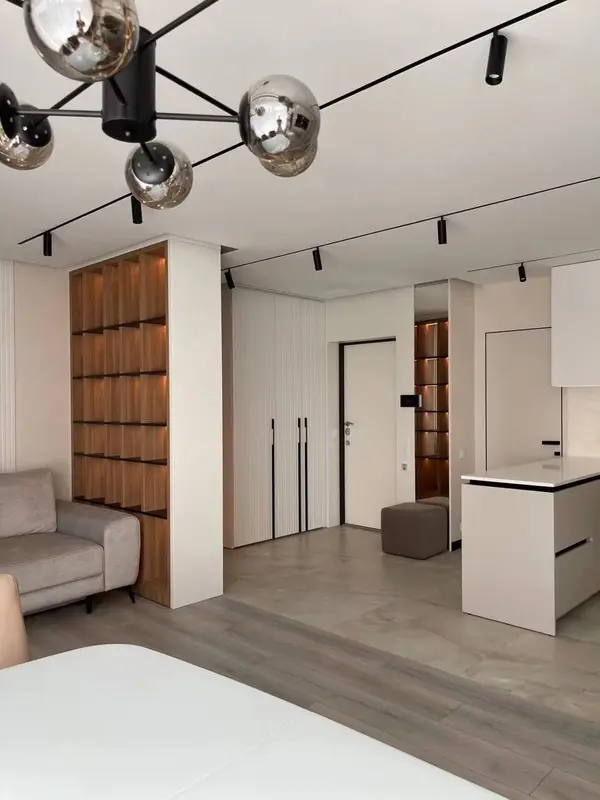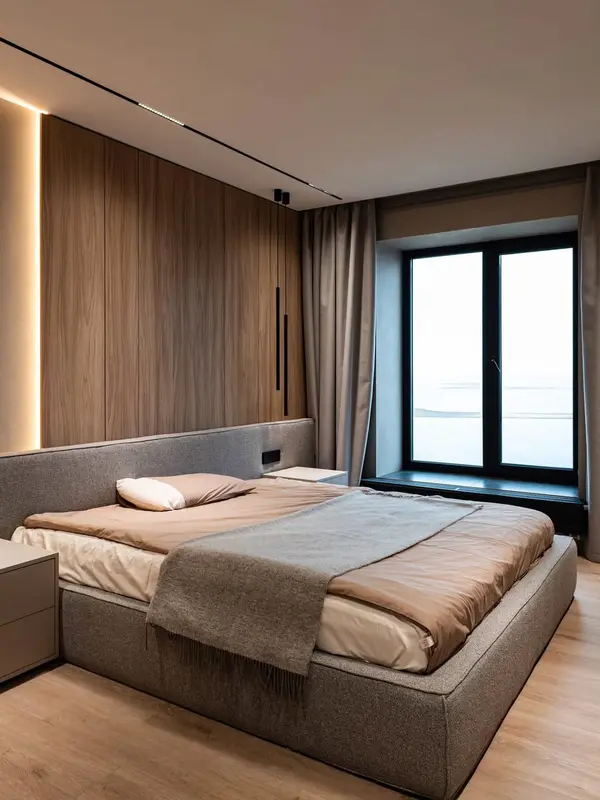
The right decision connects appearance with construction and maintenance. For projects in Elche, we also check the actual light, access and conditions in the room.
01
How to give classical furniture a convincing direction
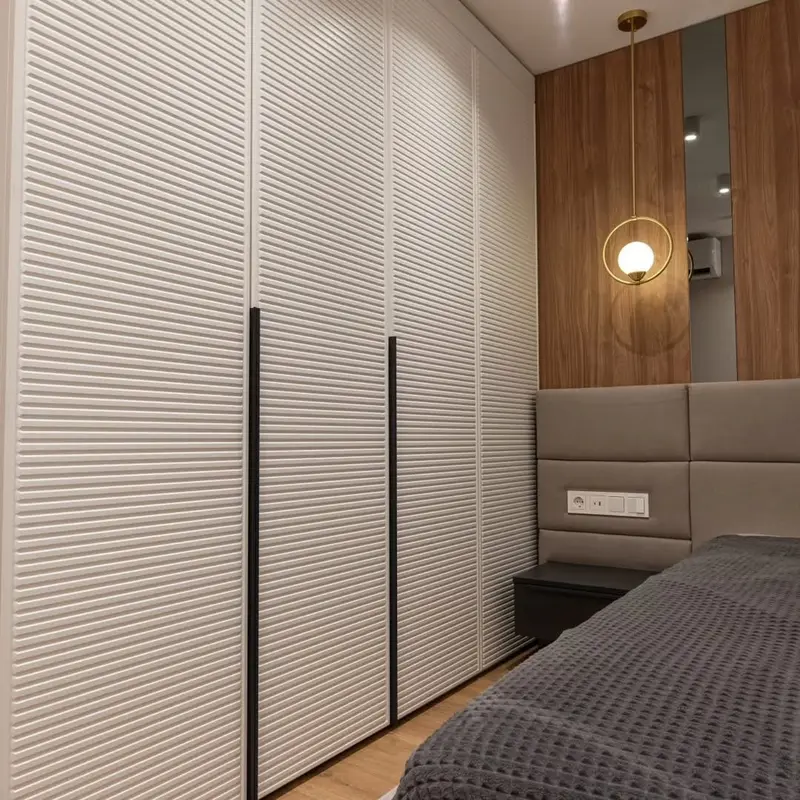
Classical joinery feels convincing when proportion and shadow lines do the work, rather than applied decoration everywhere. Its useful qualities include framed fronts and measured cornices and plinths.

02
Where it tends to work
We consider it for wardrobes, kitchens, living-room furniture and commercial work when its character supports the brief rather than leading it.
03
What keeps the scheme from becoming a cliché
Oversized mouldings in small rooms and mixing unrelated period details should be discussed before drawings or samples are approved.
04
How it combines
Warm timber or painted finishes and visible handles with appropriate scale can be balanced with simpler surfaces, so the finished room is coherent rather than overworked.
05
Guidance from a project manager
We compare realistic alternatives and explain what changes in construction, upkeep and price. You are not expected to specify classical furniture unaided.
06
After installation
Cleaning, light exposure, moving parts and local repair are considered so the choice still makes sense after years of use.
Project thinking
From reference image to workable specification
We do not begin with a catalogue code. The space and the job of the furniture determine where this approach is useful and where another solution would be more honest.
01
Read the room first
Existing floors, doors, wall colours and daylight set the context. Framed fronts may look very different beside warm stone, cool tiles or strong coastal light.
02
Use it where it matters
Measured cornices and plinths can be the right focus, while less visible areas use a simpler material. This often improves both performance and budget control.
03
Draw the junctions
Edges, handles, shadow gaps, glass, lighting and adjacent panels are resolved with the material. A finish cannot be separated from the detail that contains it.
04
Approve a representative sample
Variation, sheen and texture are discussed before production. If natural materials are involved, we also agree what degree of variation should be expected.
05
Think about maintenance
The point about oversized mouldings in small rooms is not a reason to reject the option, but it should shape where and how the approach is used.
06
Before any finish is shortlisted
A reference image can establish mood, but it cannot tell us whether bespoke furniture with a classical character will suit the room in Elche. We test the image against generous storage needs, the intended contents and the way the space is crossed.
07
A small detail that changes the whole piece
The visible character may come from measured cornices and plinths, yet the success of the piece often rests on a quieter decision: where a joint ends, how a hand reaches an opening, or how the lowest edge meets the floor.
08
A useful objection
There are situations where we would advise against the first idea. If hot bright interiors makes warm timber or painted finishes difficult to judge or maintain, we show a nearby alternative and explain the difference without turning the discussion into a sales pitch.
09
The property has the final say
The point about hot bright interiors is not a decorative footnote. It can flatten a pale surface, sharpen a grain pattern or reveal marks that were invisible in a catalogue photograph.
10
What the quotation should make clear
A quotation for bespoke furniture with a classical character should not hide behind a single headline figure. It should make the construction, visible finish, moving parts and fitting scope recognisable.
11
From workshop bench to finished room
Generous storage needs and coordination with renovations are considered while the piece is still being divided into workable parts. The aim is a calm fitting sequence, not an improvised solution in the hallway.
12
A brief grounded in Elche
Local context is practical rather than decorative. Around Elche, city apartments, family houses and homes in surrounding residential areas can present very different access, light and maintenance conditions.
13
From entrance to final position
For Elche, access is checked at the actual address. That condition becomes a design input, not a problem left for the delivery day.
14
A finish seen in context
The room, not the catalogue, is the colour reference. We review hot bright interiors before confirming timber tone, lacquer sheen or a strongly textured surface.
15
Existing work and everyday use
The specification also considers mixed building access. Where the work involves coordination with renovations, dimensions and responsibilities are fixed before one part closes another in.
What helps us assess classical furniture
Photographs of the room in daylight and artificial light
The intended use and likely frequency of cleaning or opening
Materials and colours that will remain nearby
Approximate dimensions and any services to integrate
A reference image, with the relevant detail marked or described
The preferred balance between appearance, durability and investment
Questions about bespoke furniture with a classical character
Can it be used in a kitchen or bathroom?+
Sometimes, but position and construction matter. Moisture, heat, cleaning and edge exposure must be checked before we confirm the specification.
Can I see a sample in the room?+
Where colour, texture or sheen is important, a representative physical sample is the useful reference. Screens and showroom lighting can be misleading.
Is classical furniture right for every project?+
No. It depends on the use, room conditions, desired appearance and budget. We may recommend it only for selected faces or combine it with a more practical supporting material.
Does classical furniture make the project more expensive?+
Its effect depends on grade, thickness, finish, cutting yield and workshop detail. We compare it against another suitable option on the same design.
Tu proyecto empieza aquí
Cuéntanos qué espacio quieres transformar.
Con unas fotos, medidas aproximadas y una idea de uso podemos preparar una primera orientación antes de concertar la medición.
01 Respuesta inicial y revisión de viabilidad
02 Propuesta de siguiente paso
03 A detailed quotation antes de fabricar
MMV
Diseño pensado para tu espacio
Promoción hasta el final de la semanaPromoción de esta semana
Recibe el desarrollo de tu proyecto de diseño sin costeProyecto de diseño sin coste para tu mueble
Envíanos tu solicitud antes del domingo.
Si contratas la fabricación e instalación, incluimos la propuesta inicial de diseño sin coste adicional.
Solicítalo antes del domingo. La propuesta inicial está incluida al contratar fabricación e instalación.
Incluido en la propuesta
Distribución inicial, enfoque estético y orientación de materiales adaptados al uso real.
Solicitud recibida
Revisaremos tu caso y te contactaremos para confirmar el alcance y las condiciones de la promoción.
Válida para nuevas solicitudes recibidas hasta la fecha indicada · Sujeta a valoración, contratación y alcance confirmado por el gestor · No acumulable.